Modular Kitchens on a Budget: How to Choose Plywood and Laminates Without Cutting Corners
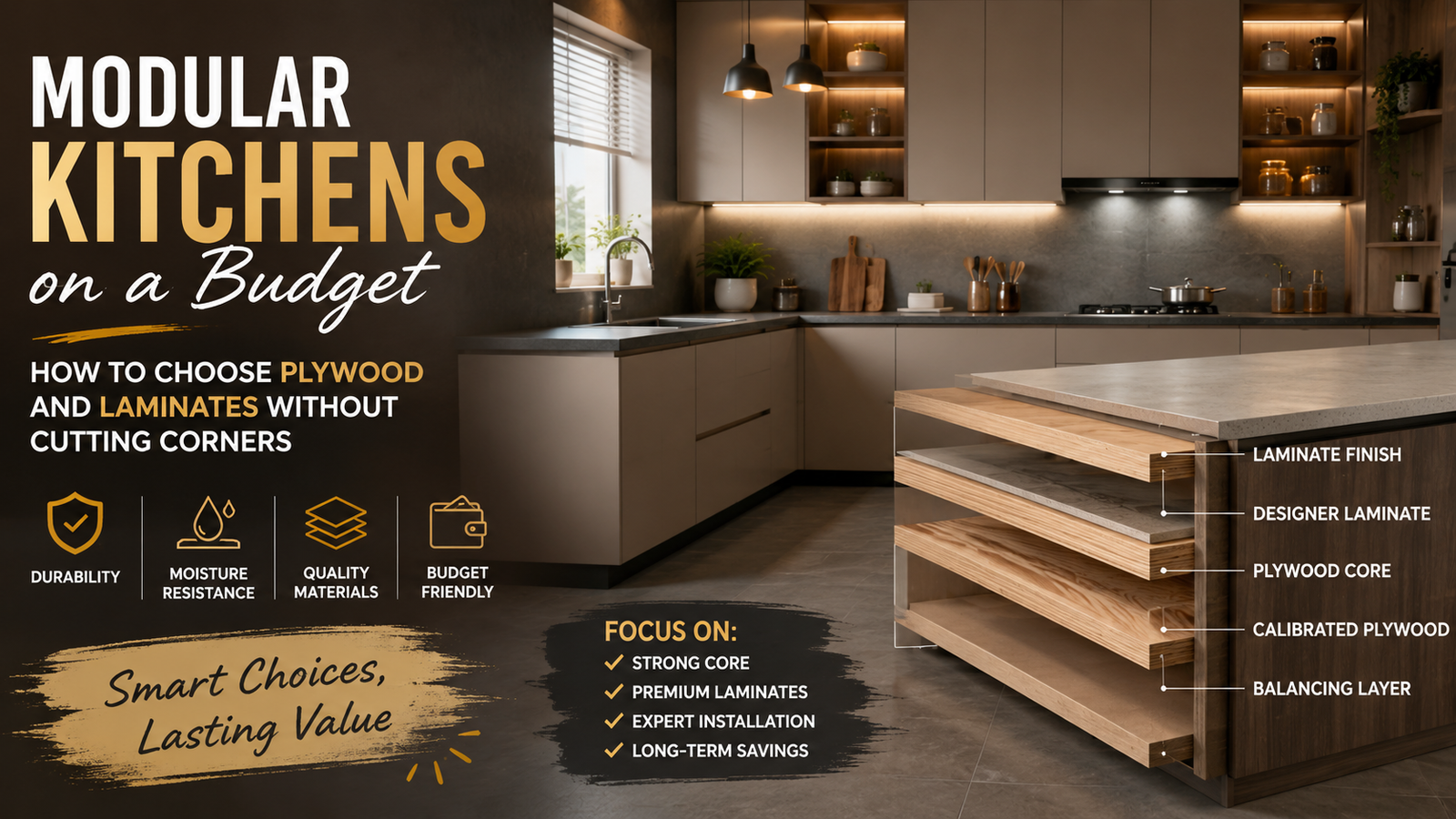
Modular Kitchens on a Budget: How to Choose Plywood and Laminates Without Cutting Corners
A tight budget doesn't have to mean a weak kitchen. The biggest mistake homeowners make when cost-cutting on modular kitchens isn't choosing a smaller layout or skipping fancy hardware — it's compromising on plywood and laminates, the two materials that determine whether your kitchen survives daily grease, steam, and water splashes for the next 10-15 years.
The good news? You can build a genuinely durable modular kitchen on a budget, as long as you know exactly where to save and where not to. This guide breaks down precisely that.
Why Plywood and Laminates Are Non-Negotiable in a Kitchen
Unlike bedroom wardrobes or living room units, kitchen cabinets face constant exposure to moisture, heat, and oil. This makes the underlying plywood and outer laminate far more important here than in any other part of your home.
A kitchen with weak core materials typically shows:
- Swollen or blackened shutters near the sink area within 1-2 years
- Laminate peeling off at the edges due to steam exposure
- Sagging shelves under the weight of utensils and appliances
- A musty smell from moisture trapped inside low-grade boards
A kitchen built with the right materials, on the other hand, stays functional and visually intact well beyond a decade — even on a modest budget.
Step 1: Get the Plywood Grade Right (This Is Where Budget Should NOT Be Cut)
If there's one area to prioritize spending, it's the plywood grade. Everything else — laminate finish, handle design, lighting — can be upgraded later. Plywood cannot be replaced without dismantling the entire cabinet.
MR Grade vs BWR vs BWP: What's Actually Needed for a Kitchen
| Grade | Moisture Resistance | Best For | Budget Fit |
|---|---|---|---|
| MR (Moisture Resistant) | Low-Moderate | Dry areas, overhead cabinets | Budget-friendly |
| BWR (Boiling Water Resistance) | High | Sink base units, under-counter cabinets | Recommended minimum |
| BWP (Boiling Waterproof) | Very High | High-moisture zones, humid climates | Best long-term value |
For Hyderabad's climate — where humidity spikes during monsoon — BWR-grade plywood is the practical minimum for kitchen base units, especially those near the sink or dishwasher. You can use standard MR grade for overhead cabinets that stay dry, which is a smart way to control costs without compromising where it matters.
Smart Budget Tip
Don't apply the same plywood grade uniformly across the entire kitchen. Spend on BWR/BWP for the bottom units (sink, stove-side cabinets) and use MR grade for tall units and lofts that rarely encounter moisture. This single decision can meaningfully reduce your total plywood cost.
Step 2: Choosing Laminates Without Overspending
Laminates are the visible face of your kitchen, but budget buyers often overspend here while underspending on plywood — exactly backwards. Laminates are replaceable finishes; plywood is structural. Once you've secured the right board grade, laminates become where you can genuinely save.
Types of Laminates and Where They Fit a Budget
- Suede/Matte Laminates: Hide fingerprints and water spots well, moderately priced, ideal for daily-use kitchens
- Glossy Laminates: Visually premium but show smudges and scratches faster; better for low-traffic sections like lofts
- Textured/Woodgrain Laminates: Excellent budget option that mimics natural wood finishes at a fraction of veneer cost
- Acrylic/High-Gloss Panels: Skip these for a tight budget; they cost significantly more and are prone to scratching
Practical approach: Use a durable matte or suede laminate for shutters and high-touch areas, and save on lofts or less visible sections with simpler finishes.
Step 3: Where You Can Genuinely Cut Costs (Without Regret)
- Hardware brand: Mid-range hinges and channels work fine for most households; premium soft-close hardware can be added later
- Countertop material: Laminate or granite works as a budget alternative to quartz without major functional loss
- Handle design: Simple profile handles cost less than designer pulls and are just as functional
- Cabinet depth customization: Standard modular sizes are more cost-effective than fully custom dimensions
Step 4: Where You Should Never Compromise
- Plywood grade for wet zones (sink, dishwasher, water purifier cabinets)
- Edge banding quality — poor edge sealing lets moisture seep into the core, regardless of how good the plywood itself is
- Hinges load capacity for heavy overhead cabinets
- Ventilation gaps in cabinets housing gas connections or under-sink plumbing
How to Source Quality Materials Without Overpaying
The real secret to a budget-smart modular kitchen isn't just material selection — it's sourcing. Buying directly from a plywood store rather than through multiple middlemen (contractor markups, interior designer commissions) often brings costs down substantially without touching quality.
If you're searching for a "plywood store near me" in Narsingi or Goshamahal, look for one that:
- Stocks multiple grades (MR, BWR, BWP) so you can mix strategically across the kitchen
- Offers a genuine range of laminate finishes, not just a limited catalog
- Provides transparent, itemized pricing so you know exactly what you're paying for
- Has staff who can guide grade selection based on cabinet placement, not just upsell the priciest option
At Plylam Centre, kitchen buyers get straightforward guidance on matching plywood grade and laminate finish to their specific budget and layout — helping Hyderabad homeowners avoid the classic trap of overspending on visible finishes while underspending on structural boards.
Final Word: Budget Smart, Not Budget Weak
A cost-conscious modular kitchen isn't about buying the cheapest materials across the board — it's about spending intelligently on what actually determines longevity (plywood core and grade) while saving on what's easily upgraded later (laminate finish, hardware, and handles). Visit a trusted, best plywood store before finalizing your kitchen order, and you'll end up with a space that looks good today and still performs well a decade from now.
Frequently Asked Questions
1. What's the minimum plywood grade recommended for a modular kitchen?
A: BWR (Boiling Water Resistant) grade is the practical minimum for kitchen base units, especially near the sink and stove, where moisture exposure is highest.
2. Can I use MR grade plywood anywhere in the kitchen?
A: Yes, MR grade works well for dry areas like overhead cabinets and lofts that don't come into regular contact with water or steam.
3. Which laminate type is best for a budget modular kitchen?
A: Matte or suede laminates offer the best balance of durability, fingerprint resistance, and cost, making them ideal for daily-use kitchen shutters on a budget.
4. Is glossy laminate a good choice for kitchens?
A: Glossy laminates look premium but show smudges, water spots, and scratches more easily. They're better suited for low-touch areas like loft shutters rather than daily-use cabinets.
5. Where should I avoid cutting costs in a modular kitchen?
A: Never compromise on plywood grade for wet zones, edge banding quality, and hinge load capacity — these directly affect the kitchen's structural longevity.
6. How can I save money without compromising kitchen quality?
A: Use higher-grade plywood only where moisture exposure is high, opt for mid-range hardware, choose simpler handle designs, and source materials directly from a reliable plywood store to avoid middleman markups.
7. Does Hyderabad's climate affect plywood grade selection for kitchens?
A: Yes, Hyderabad's humid monsoon season makes moisture-resistant grades like BWR or BWP especially important for kitchen cabinets, more so than in drier climates.
8. How do I find a trustworthy plywood store near me in Narsingi or Goshamahal?
A: Look for a store offering multiple plywood grades, a wide laminate selection, transparent pricing, and knowledgeable staff who can recommend materials based on your specific kitchen layout.
9. Is edge banding really that important?
A: Yes. Even high-grade plywood can absorb moisture at unsealed edges, so quality edge banding is essential for protecting the core from water damage over time.
10. Can I mix plywood grades within the same kitchen to save money?
A: Absolutely — using BWR/BWP grade only for sink-area and base cabinets while using MR grade for dry, overhead units is a smart, budget-friendly strategy without compromising durability.
More Blogs

Turn Your Dream Spaces Into Reality
Narsingi Branch
1-79, Osman Sagar Rd, beside South India Bank, Manchirevula, Narsingi, Telangana 500075
https://goo.gl/maps/31oyDP4wo8zjLhyw7
Contact:
+91 998 999 0105
+91 868 864 6761
Goshamahal Branch
5-5-685, Pink House, Goshamahal, Hyderabad, Telangana 500012


Contact Information:
+91 998 999 0105 +91 868 864 6761 040 2465 4077 040 6674 6699 040 6641 2737 +91 998 999 0104Email address:
Plylam_centre@yahoo.com
© Plylam Centre, All Right Reserved.
Designed and Developed by 10ODM.