Plywood for Exteriors: Weather-Resistant Boards That Actually Last
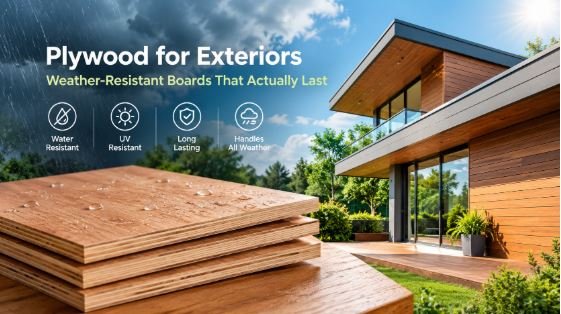
Plywood for Exteriors: Weather-Resistant Boards That Actually Last
Rain, humidity, direct sun, and temperature swings destroy ordinary wood panels faster than most homeowners expect. Doors, gates, outdoor cabinets, sheds, and balcony panels all need material that can shrug off moisture without warping, delaminating, or rotting. This is exactly where exterior grade plywood earns its keep — but not every board sold as "outdoor-friendly" actually holds up.
If you're choosing panels for anything exposed to weather, understanding what separates genuinely durable boards from ones that quietly fail after one monsoon season will save you money, repairs, and frustration.
Why Regular Plywood Fails Outdoors
Standard interior plywood uses adhesives and core wood that were never designed to handle sustained moisture. Once water seeps into the edges or surface, the veneer layers absorb it unevenly. This causes:
- Swelling and warping of panels
- Delamination (layers peeling apart)
- Fungal growth and rot in the core
- Weakened screws and hardware grip over time
Even a few weeks of exposure to rain or high humidity can be enough to start this damage. That's why exterior applications call for a fundamentally different type of board — not just a "thicker" or "better quality" version of interior ply.
What Makes Plywood Truly Weather-Resistant
Weatherproof plywood isn't defined by a coat of paint or varnish. It comes down to three core factors:
1. Bonding Type (BWP/BWR Grade)
Genuine outdoor boards use Boiling Water Proof(BWP) or Boiling Water Resistant (BWR) phenolic resin adhesives. These bonds are tested by boiling the plywood for hours — if the layers stay intact, the board qualifies as waterproof plywood. Ordinary MR (Moisture Resistant) grade plywood is not built for direct or prolonged water exposure and should never be used outdoors.
2. Core Wood Quality
Dense, well-seasoned hardwood veneers resist swelling better than low-grade or recycled core material. Gaps or voids in the core create weak points where moisture collects.
3. Number of Plies and Cross-Bonding
More layers, cross-laminated at right angles, distribute stress evenly and resist warping under changing humidity — a critical trait for outdoor plywood used in gates, fencing, or exposed furniture.
Best Plywood for Exterior Use: What to Look For
When shopping for the best plywood for exterior use, check for these markers before buying:
- IS 710 certification — the Indian Standard specifically for marine and exterior plywood
- BWP-grade phenolic bonding (not just BWR, if the application involves constant water contact)
- Termite and borer-proof treatment (chemically treated core)
- Consistent thickness with no visible core gaps at the edges
- A reputable, quality-checked source rather than unbranded local stock
At Plylam Centre, every batch of exterior-grade plywood is checked against these standards before it reaches a client's project — because a board that fails outdoors isn't just an inconvenience, it's a costly redo.
Common Outdoor Applications for Exterior Grade Plywood
Exterior grade plywood is used far beyond just doors and windows. Typical applications include:
- Outdoor kitchen cabinets and utility units
- Garden sheds, gates, and boundary panels
- Balcony and terrace furniture
- Signage and hoardings exposed to sun and rain
- False ceilings in semi-covered outdoor areas
- Boat and marine-adjacent structures (marine-grade variants)
Each use case has slightly different demands — a balcony panel facing direct monsoon rain needs a higher BWP rating than a covered shed wall, for instance.
Waterproof Plywood vs. Marine Plywood: Is There a Difference?
This is one of the most searched questions, and the answer matters. Waterproof plywood (BWP grade) is designed to resist continuous exposure to moisture and is suitable for most exterior residential and commercial applications. Marine plywood goes a step further — it uses higher-density hardwood veneers with zero core gaps and is built to withstand direct, constant water submersion, such as in boats or dockside structures.
For most homes and commercial exteriors, standard BWP-grade exterior grade plywood is sufficient and more cost-effective than marine-grade boards.
How to Extend the Life of Outdoor Plywood
Even the best board benefits from proper installation and care:
- Seal all exposed edges with waterproof sealant or edge banding
- Apply exterior-grade paint or polyurethane coating for UV protection
- Ensure proper drainage so water doesn't pool against the panel
- Avoid direct ground contact — use raised frames or footings
- Re-inspect and reseal edges annually, especially before monsoon season
Skipping edge sealing is one of the most common mistakes — water almost always enters through unsealed edges before it affects the flat surface.
Making the Right Choice
Choosing weatherproof plywood isn't about picking the most expensive option on the shelf — it's about matching the BWP/BWR grade, core quality, and certification to your specific outdoor application. A gate exposed to direct rain needs different specifications than a covered balcony ceiling panel.
If you're unsure which grade fits your project, Plylam Centre offers guidance based on the specific exposure conditions your build will face, along with certified stock that's tested for genuine outdoor performance — not just labeled for it.
Frequently Asked Questions
Q1: What is the best plywood for exterior use?
BWP (Boiling Water Proof) grade plywood certified under IS 710 is generally considered the best plywood for exterior use, as it's specifically tested to withstand prolonged moisture exposure without delaminating.
Q2: Is all waterproof plywood the same as marine plywood?
No. Waterproof (BWP-grade) plywood resists continuous moisture and suits most outdoor uses, while marine plywood is denser, gap-free, and built for direct water submersion like boats and docks.
Q3: Can I use MR-grade plywood outdoors if I paint or seal it well?
No. MR-grade plywood is only moisture resistant, not waterproof. Even heavy sealing won't compensate for the weaker adhesive bond, and it will eventually delaminate under sustained outdoor exposure.
Q4: How long does exterior grade plywood typically last outdoors?
With proper edge sealing, coating, and drainage, quality exterior grade plywood can last 10–15 years or more outdoors, depending on climate and maintenance.
Q5: Does weatherproof plywood need additional painting or coating?
Yes. While weatherproof plywood resists water penetration through its adhesive bond, adding exterior paint or polyurethane coating protects the surface from UV damage and extends its lifespan further.
Q6: What certification should I check before buying outdoor plywood?
Look for IS 710 certification, which is the Indian Standard specifically covering marine and exterior-grade plywood performance.
Q7: Is termite treatment necessary for outdoor plywood?
Yes. Outdoor conditions increase exposure to pests, so chemically treated, borer- and termite-proof core wood is essential for long-term durability.
Q8: Can outdoor plywood be used in direct sunlight without damage?
Quality exterior grade plywood with UV-resistant coating handles direct sunlight well, but uncoated boards can dry out and crack over time, so a protective finish is recommended.
Q9: Where can I buy certified exterior grade plywood?
Plylam Centre supplies certified, quality-checked exterior and waterproof plywood suited to different outdoor applications, along with guidance on selecting the right grade for your project.
Q10: What's the biggest mistake people make when using plywood outdoors?
Leaving edges unsealed. Water typically enters through exposed edges first, so proper edge banding or sealant is critical even with high-grade waterproof plywood.
More Blogs

Turn Your Dream Spaces Into Reality
Narsingi Branch
1-79, Osman Sagar Rd, beside South India Bank, Manchirevula, Narsingi, Telangana 500075
https://goo.gl/maps/31oyDP4wo8zjLhyw7
Contact:
+91 998 999 0105
+91 868 864 6761
Goshamahal Branch
5-5-685, Pink House, Goshamahal, Hyderabad, Telangana 500012


Contact Information:
+91 998 999 0105 +91 868 864 6761 040 2465 4077 040 6674 6699 040 6641 2737 +91 998 999 0104Email address:
Plylam_centre@yahoo.com
© Plylam Centre, All Right Reserved.
Designed and Developed by 10ODM.