Small Kitchen, Big Style: Space-Saving Modular Kitchen Ideas Using the Right Materials
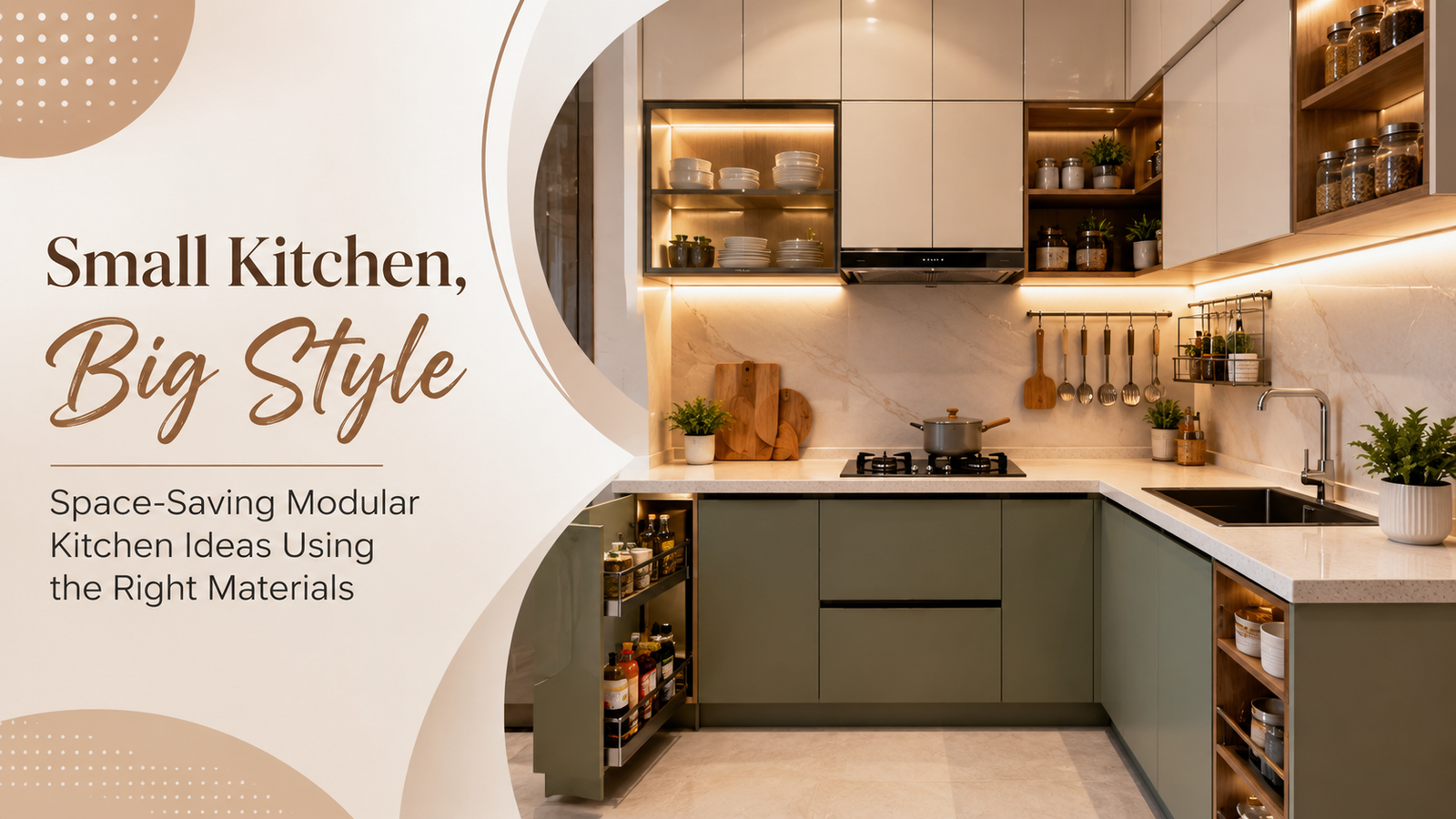
Small Kitchen, Big Style: Space-Saving Modular Kitchen Ideas Using the Right Materials
Compact kitchens are the reality for most urban Hyderabad homes — especially in apartment complexes across Narsingi and Goshamahal, where square footage comes at a premium. But a small kitchen doesn't have to mean a cramped, cluttered, or uninspired one. With the right layout choices and, just as importantly, the right materials, even a modest kitchen can feel spacious, functional, and genuinely stylish.
The secret that most homeowners overlook? Space-saving design only works long-term if it's built on materials that can handle daily wear without warping, sagging, or falling apart within a few years.
The Real Challenge With Small Kitchens
It's not just about fitting cabinets into a tight footprint. Small kitchens face compounding issues:
- Every inch of storage has to multitask
- Cabinets often get overloaded since there's less horizontal space to spread items out
- Poor ventilation in compact layouts increases humidity exposure on cabinet interiors
- Cheap materials show wear faster simply because there's less room to "hide" damage
This is exactly why material choice matters even more in a small modular kitchen than in a large one — there's less margin for error.
Layout Ideas That Maximize Small Kitchen Space
1. Vertical Storage Over Horizontal Sprawl
Instead of adding more base cabinets, extend storage upward. Tall units and lofts that reach ceiling height use vertical space that's typically wasted, without adding to the kitchen's footprint.
2. L-Shaped or Single-Wall Layouts
For kitchens under 80 sq. ft., L-shaped or single-wall layouts consistently outperform U-shaped designs, leaving more open floor space for movement.
3. Pull-Out and Sliding Storage Units
Pull-out pantry racks, sliding baskets, and corner carousel units make use of awkward corners that standard shelving wastes entirely.
4. Under-Sink and Toe-Kick Storage
Often ignored, the toe-kick area (the base right under the cabinet) can house slim pull-out drawers for trays, foil rolls, or cleaning supplies.
5. Multi-Purpose Islands or Peninsulas (For Slightly Larger Compact Kitchens)
A small mobile island or fold-down peninsula can double as prep space and dining seating without permanently occupying floor area.
Why Material Choice Makes or Breaks a Small Kitchen
A compact kitchen sees the same — sometimes more — daily use as a larger one, just packed into less space. That means every cabinet, shelf, and shutter needs to be built from materials that can handle:
- Constant moisture exposure near the sink and stove
- Heat and steam from cooking in a smaller, less ventilated area
- Weight-bearing demand since compact kitchens often rely more heavily on vertical storage
Plywood Grade: The Non-Negotiable Foundation
For any modular kitchen, but especially a small one where every cabinet works overtime, BWR (boiling water resistant) or BWP grade plywood is strongly recommended for base units and anything near water sources. MR grade can be reserved for drier, upper storage zones like lofts.
Laminate Finish: Function First, Then Style
- Matte laminates hide fingerprints and daily grime better in a compact, high-traffic kitchen
- Light-toned finishes visually expand a small space and reflect available light
- Avoid heavy, dark gloss in very small kitchens — it can make the room feel more enclosed
Hardware That Supports Space-Saving Design
Soft-close hinges, telescopic channels, and space-saving pull-out systems rely on solidly built cabinet frames. If the plywood underneath flexes or weakens, even premium hardware won't function smoothly for long.
A Simple Material Checklist for Small Modular Kitchens
| Component | Recommended Choice | Why It Matters |
|---|---|---|
| Base cabinets (near sink/stove) | BWR/BWP-grade plywood | High moisture resistance |
| Overhead cabinets/lofts | MR-grade plywood | Cost-effective for dry zones |
| Shutters | Matte or light-toned laminate | Hides wear, brightens space |
| Edge banding | High-quality PVC or laminate edging | Prevents moisture seepage at joints |
| Hardware | Mid-to-premium soft-close fittings | Supports frequent use in tight layouts |
Sourcing Quality Materials Without Overpaying
Getting the right plywood grade and laminate finish for a small kitchen doesn't have to mean overspending, but it does mean sourcing from a supplier who understands compact-kitchen demands. Buying directly through plywood wholesalers rather than multiple middlemen typically brings costs down while maintaining quality control across every board.
If you're looking for a "plywood near me" option in Narsingi or Goshamahal, it's worth choosing a plywood store Hyderabad homeowners already trust for consistent grading and honest guidance — rather than a vendor pushing whatever moves fastest off the shelf.
At Plylam Centre, small-kitchen projects get the same material scrutiny as larger ones — because compact spaces genuinely can't afford material failures. From grade selection to laminate finish, the guidance is built around what actually holds up in daily Hyderabad kitchen use, not just what looks good on day one.
Final Thoughts: Small Doesn't Mean Compromised
A small kitchen can absolutely deliver big style and big functionality — but only when smart layout choices are paired with materials built to handle the pressure of compact, high-use spaces. Prioritize plywood grade where moisture exposure is highest, choose laminate finishes that work with your space rather than against it, and source from a supplier who understands what a small kitchen actually demands.
Frequently Asked Questions
1. What's the best layout for a small modular kitchen?
A: L-shaped or single-wall layouts generally work best for kitchens under 80 sq. ft., as they maximize floor space while keeping storage and work zones efficient.
2. Which plywood grade is best for a compact kitchen?
A: BWR or BWP grade plywood is recommended for base units near the sink and stove, while MR grade works well for drier upper storage like lofts.
3. Do small kitchens need different materials than large kitchens?
A: The same quality standards apply, but material choice matters even more in small kitchens since every cabinet is used more intensively with less space to distribute wear.
4. What laminate finish works best for a small kitchen?
A: Matte, light-toned laminates are ideal since they hide fingerprints and grime effectively while visually opening up a compact space.
5. How can I add more storage without expanding my kitchen's footprint?
A: Vertical storage (tall units, lofts), pull-out pantry racks, corner carousels, and toe-kick drawers all add functional storage without increasing floor space.
6. Is dark or glossy laminate a bad choice for small kitchens?
A: Heavy, dark gloss finishes can make a compact kitchen feel more enclosed, so lighter, matte tones are generally better suited for small spaces.
7. Why is edge banding important in a small kitchen?
A: Since compact kitchens face concentrated moisture exposure, quality edge banding prevents water from seeping into the plywood core at panel joints.
8. Can premium hardware compensate for lower-grade plywood?
A: No. Hardware like soft-close hinges and telescopic channels depends on a solid, stable cabinet frame — weak plywood undermines their performance regardless of hardware quality.
9. Where can I buy quality plywood for a small kitchen project in Hyderabad?
A: Sourcing from established plywood wholesalers or a trusted plywood store Hyderabad residents rely on ensures consistent grading and better pricing than fragmented local purchases.
10. How do I find a reliable plywood near me option in Narsingi or Goshamahal?
A: Look for a supplier offering transparent grading, in-store material samples, and staff experienced in recommending materials specifically suited to compact kitchen layouts.
More Blogs


Turn Your Dream Spaces Into Reality
Narsingi Branch
1-79, Osman Sagar Rd, beside South India Bank, Manchirevula, Narsingi, Telangana 500075
https://goo.gl/maps/31oyDP4wo8zjLhyw7
Contact:
+91 998 999 0105
+91 868 864 6761
Goshamahal Branch
5-5-685, Pink House, Goshamahal, Hyderabad, Telangana 500012


Contact Information:
+91 998 999 0105 +91 868 864 6761 040 2465 4077 040 6674 6699 040 6641 2737 +91 998 999 0104Email address:
Plylam_centre@yahoo.com
© Plylam Centre, All Right Reserved.
Designed and Developed by 10ODM.